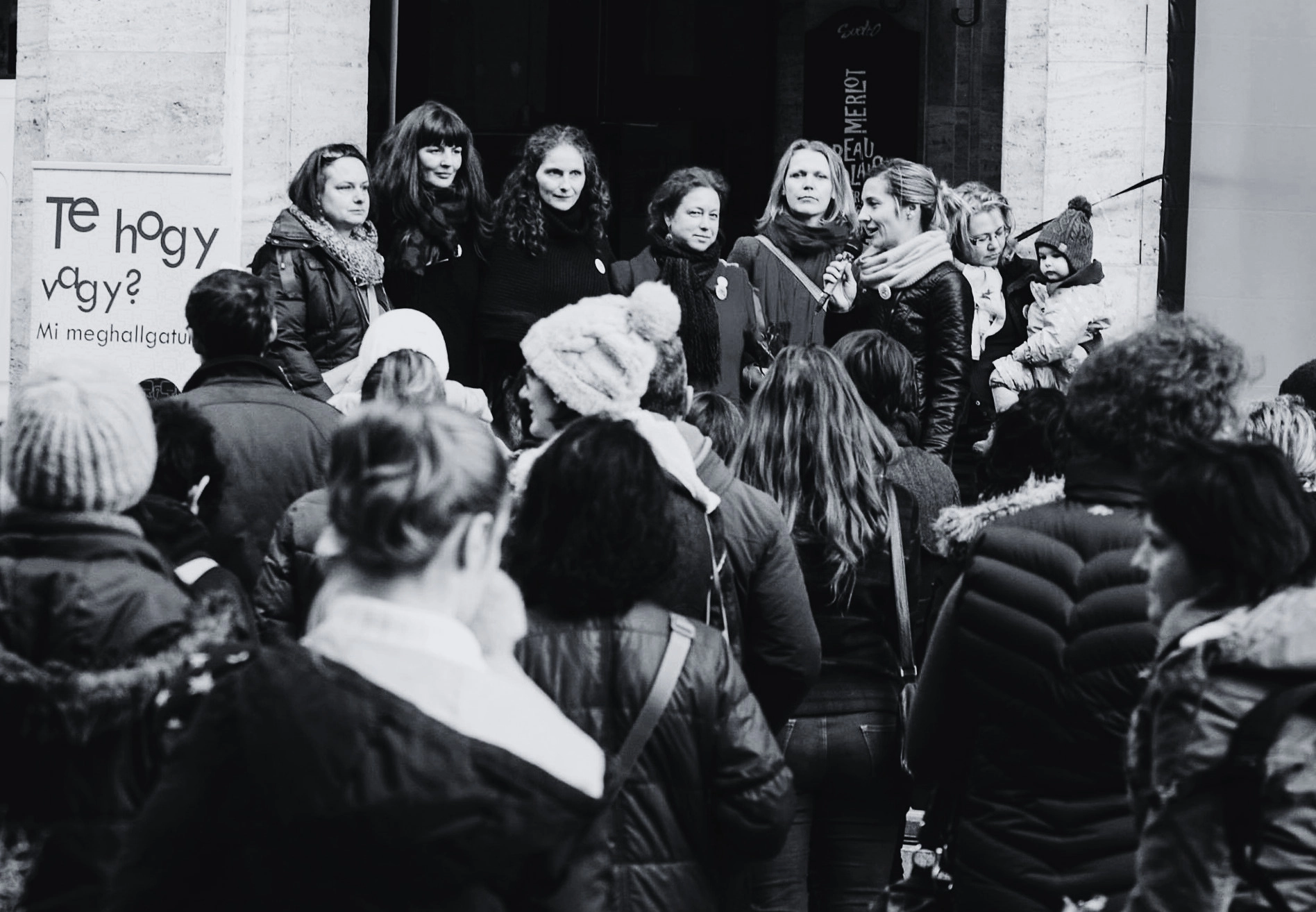
Four years ago, on a mild Barcelona autumn, fifteen human rights activists from Central and Eastern Europe, the Caucasus, and Central and North Asia gathered to co-imagine a participatory fund for the regions.
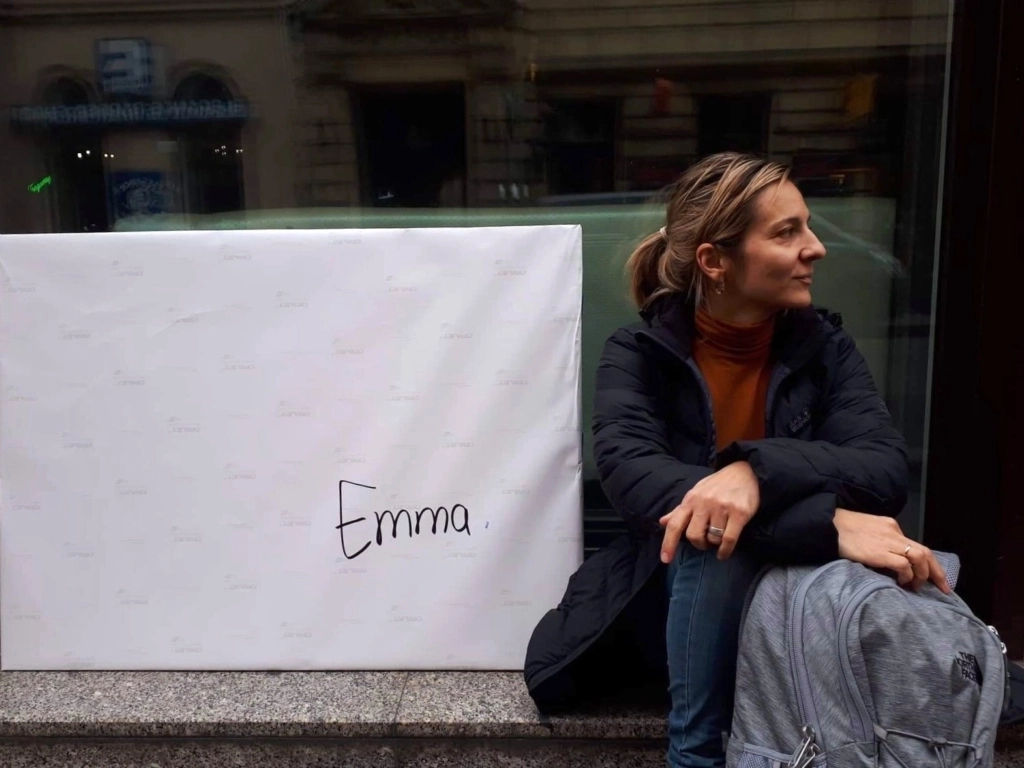
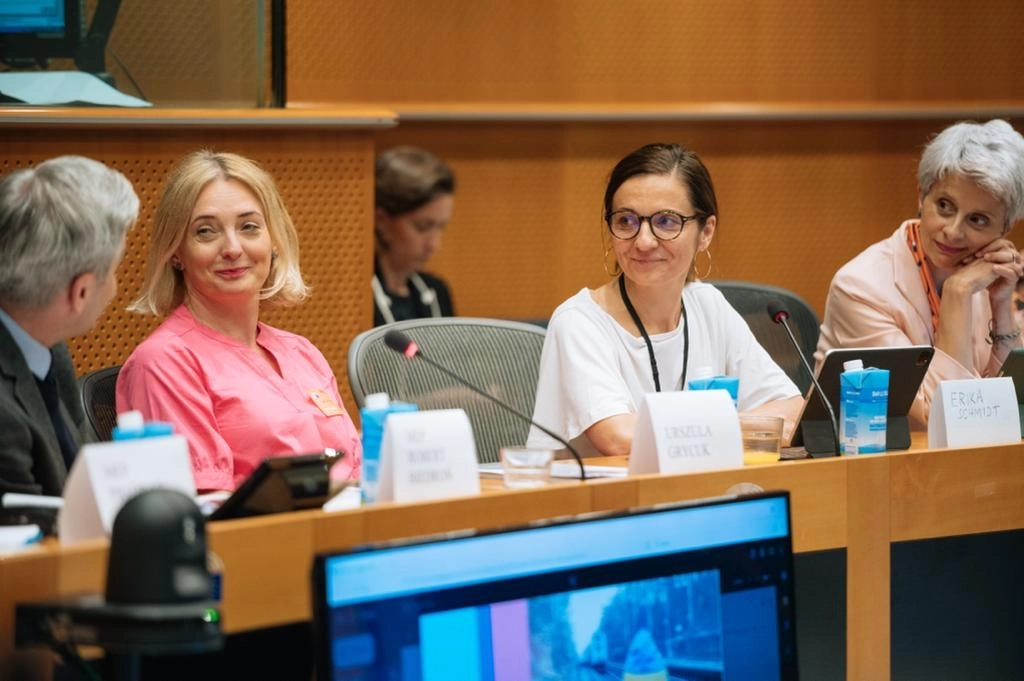
Among them was Erika Schmidt, a Hungarian women’s rights advocate. What was co-dreamed collectively in Spain a few months later became the Dalan Fund.
Since its creation in 2023, Erika has been part of the Dalan Fund, first as an advisor and later as an organizational development and governance consultant.
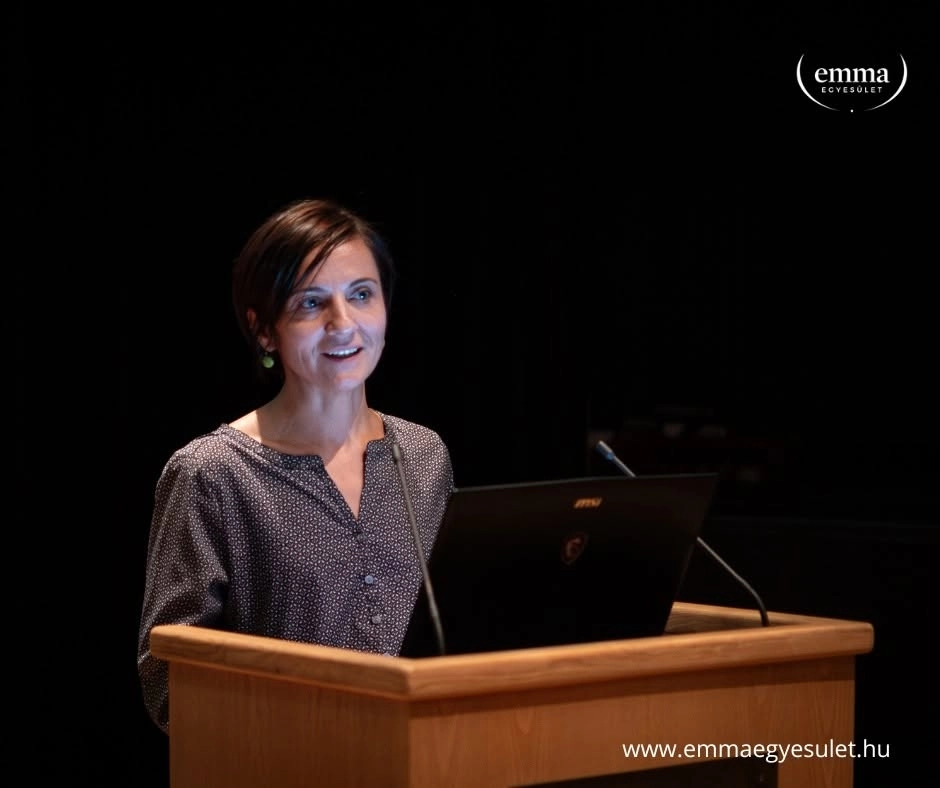
This spring, she became Dalan’s Deputy Director, stepping into the role at a pivotal moment for the fund, bringing fifteen years of experience in executive leadership, community-led organizing, and advocacy. This profile tells her story, drawing on her work and lived experience.
Growing Up in a Time of “Hope and Freedom”
Erika was born into a family with Swabian roots (German minority) in eastern Hungary. She grew up in the years of “hope and freedom” following the country’s post-communist political transition. Coming from a lower-middle-class family, Erika relied on her willingness and ability to learn.
“I had a fairly strict upbringing, shaped by conservative catholic values. You did what had to be done, properly and on time. But once I met my responsibilities, my family supported my interests. At fourteen, I left home because if you wanted an education, you had to leave. So I left. I was the first person in my family who earned a university degree.”
She studied at the catholic university, specializing in Hungarian, English, and then theoretical linguistics. “I had always been fascinated by structures and systems, as well as people’s inner worlds, and linguistics gave me both,” she explains. Alongside her specialist subjects, she explored philosophy and social theory in depth and found exceptional teachers who influenced Erika both intellectually and personally.
“If my family had given me a strong sense of duty, the university added the freedom to think critically,” she adds. “I also learned what a difference it makes when someone knows a system’s code and chooses to help you understand it, rather than showing you that you don’t belong. I didn’t have family connections with an inherited map of the intellectual or professional world that helps you understand and navigate institutions almost without noticing. I needed to learn, and I also needed support.”
Erika began teaching linguistics while still a student, and pursued an academic career. “That was more or less the life I imagined for myself. Then I became a mother,” she smiles.
Motherhood as an Institutional Barrier and a Profound Source of Freedom
After her first child was born, Erika started her PhD and firsthand experienced the structural disadvantages of motherhood. “The higher-education system seemed to be designed as an obstacle course for a woman with a small child and no support. Eventually, I left the doctoral program,” she explains.
At the same time, motherhood transformed her sense of identity, her understanding of women and society. Having experienced violence earlier in her life and drawing on her personal experiences within the healthcare system, Erika chose to give birth at home.
Childbirth, she says, made her feel stronger than she had ever felt before and opened up a completely different world for her.
For Erika, motherhood brought feminism and women’s rights activism into her life.
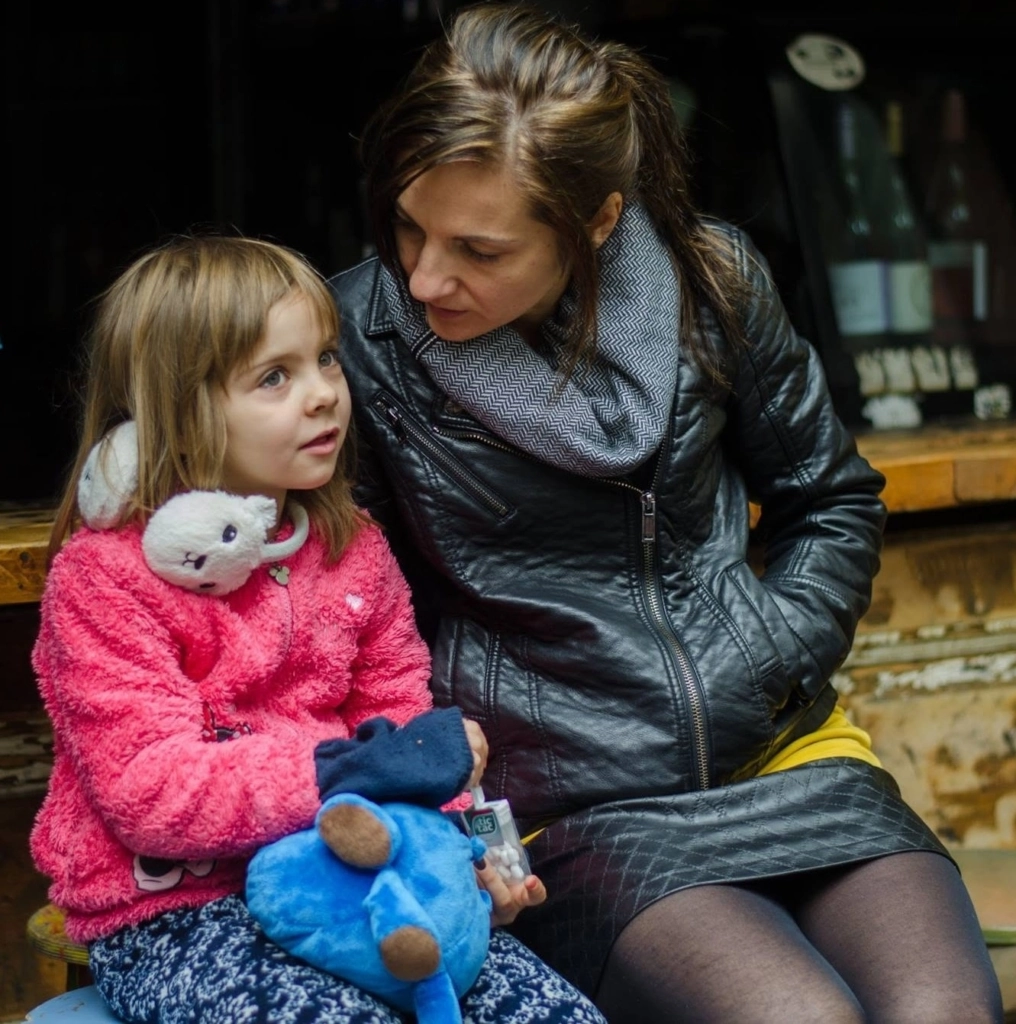
“It was a transformative experience. Part of that was discovering what happens when women treat and support other women with respect,” says Erika. “I started listening to mothers. On playgrounds, in doctors’ waiting rooms, in stairwells, women shared their stories with me, and I could not stop thinking about how something that can be so empowering becomes, within institutional settings, an experience that leaves so many women with lasting physical and psychological injuries.”
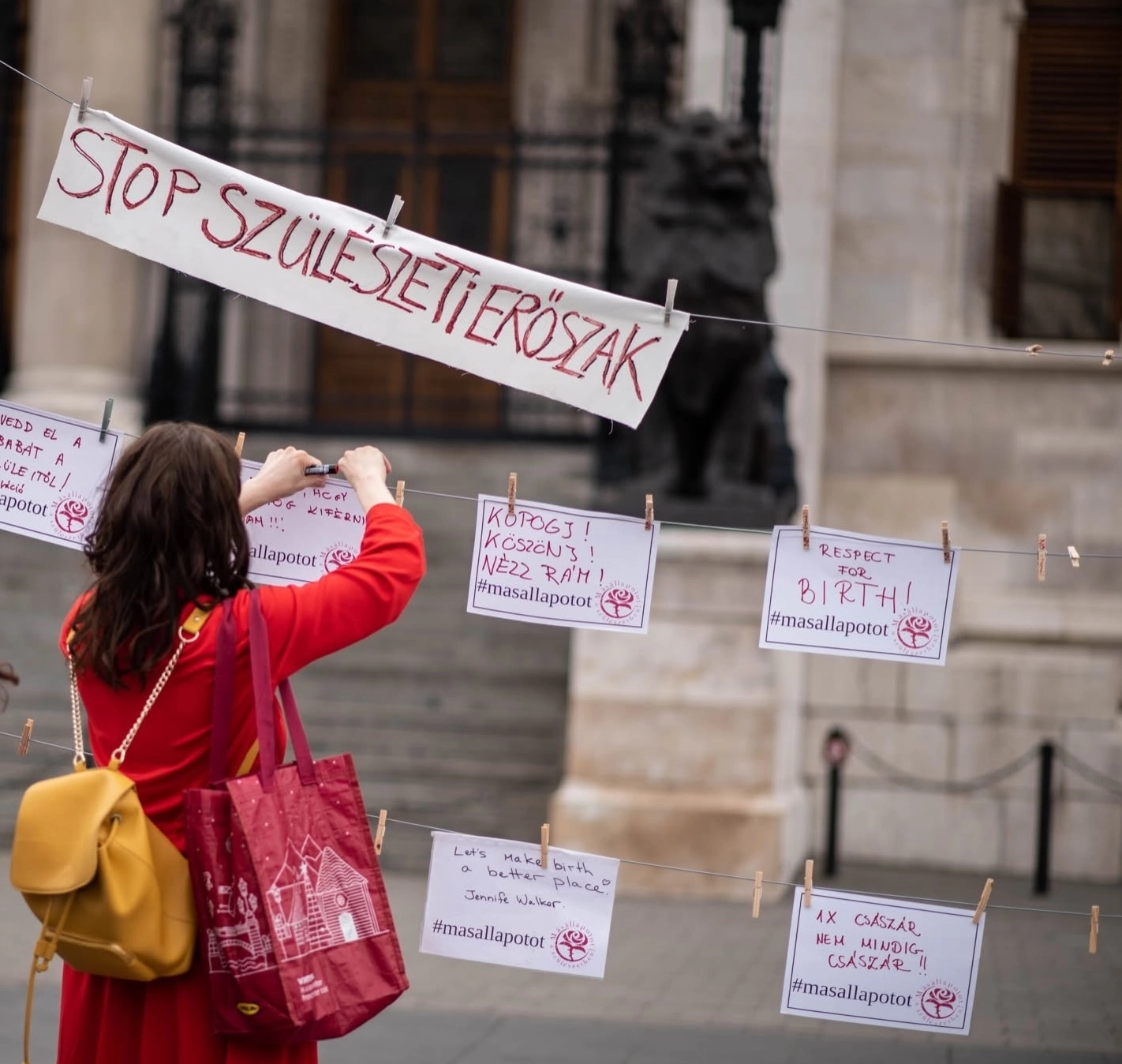
At that time, home birth was unregulated and in a legal grey zone in Hungary. Legal proceedings against independent midwives had already begun. Between the birth of her second and third children, one of the leading figures of the Hungarian home-birth movement, Dr. Ágnes Geréb was arrested.
Translating Between the Words and Worlds
Erika’s activism started with translation and interpretation, preparing background advocacy materials for the out-of-hospital birth movement. Over time, translation became something deeper.
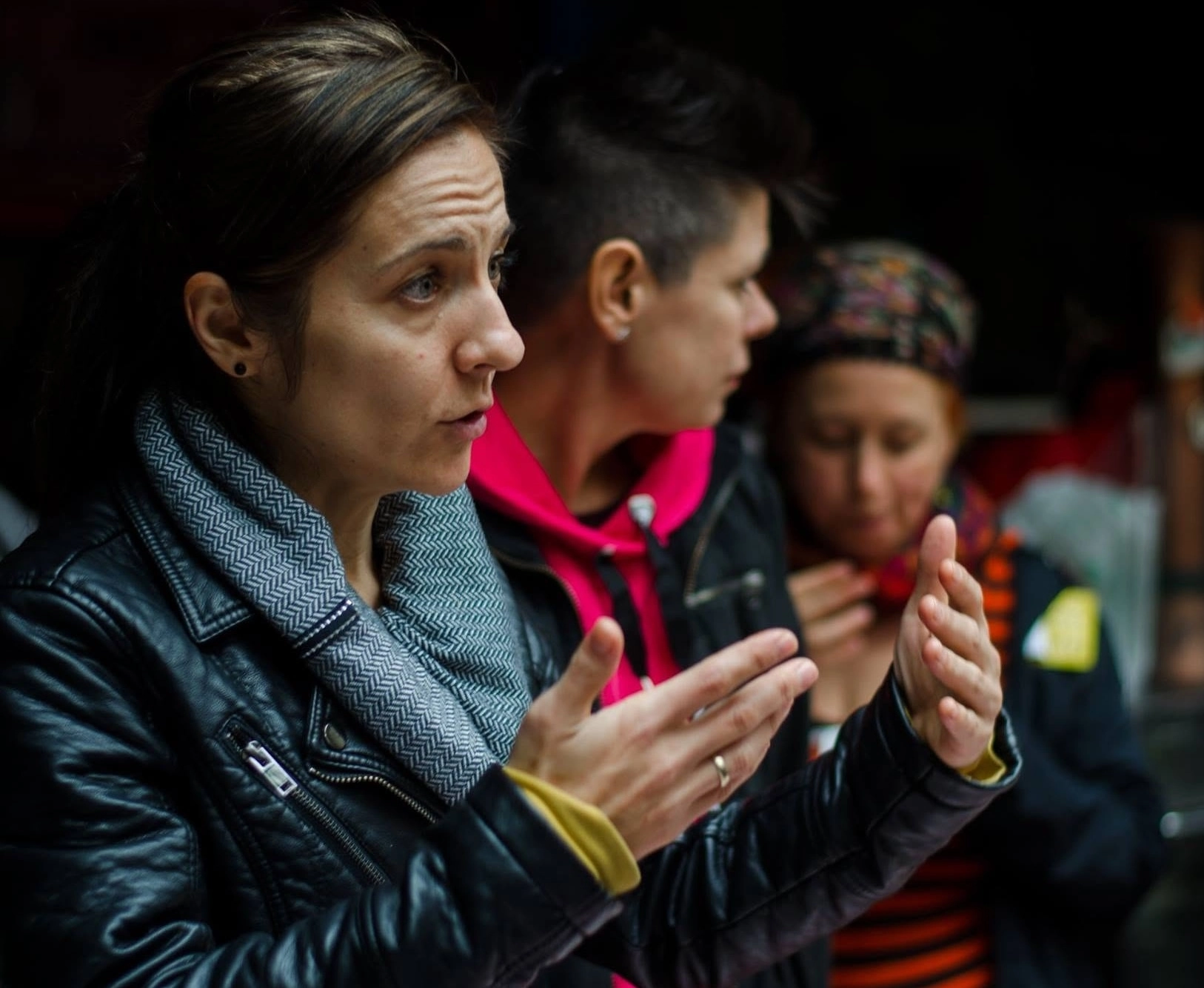
“I began to make conscious use of my translation skills between language systems. Between lived experience and theory,” she says. “Between grassroots realities and institutional language. Between local actors and international spaces. Between different political or intellectual traditions, such as conservative thought and feminism. For a long time, that ability to move between worlds was one of my most useful tools.”
As she moved between worlds, Erika’s role in the movement deepened, from volunteer interpreter to project associate, program lead, operational lead, and eventually Executive Director of EMMA Association, a grassroots organization for sexual and reproductive health and rights. Her focus scaled just as rapidly, from the home birth to institutional maternity care reforms, sexual and reproductive health and rights, other forms of violence against women, feminist activism, intersectionality, and eventually civil society itself.
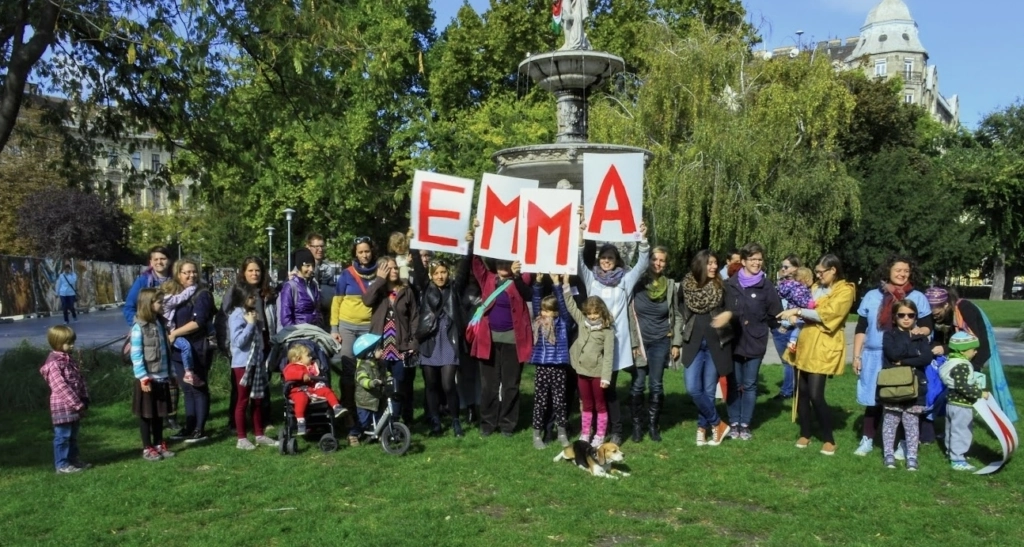
Under her leadership, what began as a small grassroots initiative, a dream of friends working on an issue marginal even within feminism, became Hungary’s largest women’s rights organization, working across the full spectrum of sexual and reproductive health and rights. Its first major advocacy success was the Ternovszky v. Hungary case before the European Court of Human Rights, which it pursued in cooperation with the Hungarian Civil Liberties Union and that led to the legal regulation of home birth in Hungary. It has also developed and provided award-winning initiatives such as an anonymous information and psychological support line for mothers fully operated by trained volunteers; a community-led accompaniment network for the Roma women in East Hungary; an incubation program for Roma women’s community-based SRHR initiatives; and complex-case management support to Ukrainian women who fled the war to Hungary and needed gynecological or obstetric care. She also led extensive advocacy work at the national and European levels.
“We combined advocacy with social activism, and developed trauma-informed services that did not otherwise exist,” says Erika. “Collaboration, cooperation, coordination were at the heart of everything we did.”
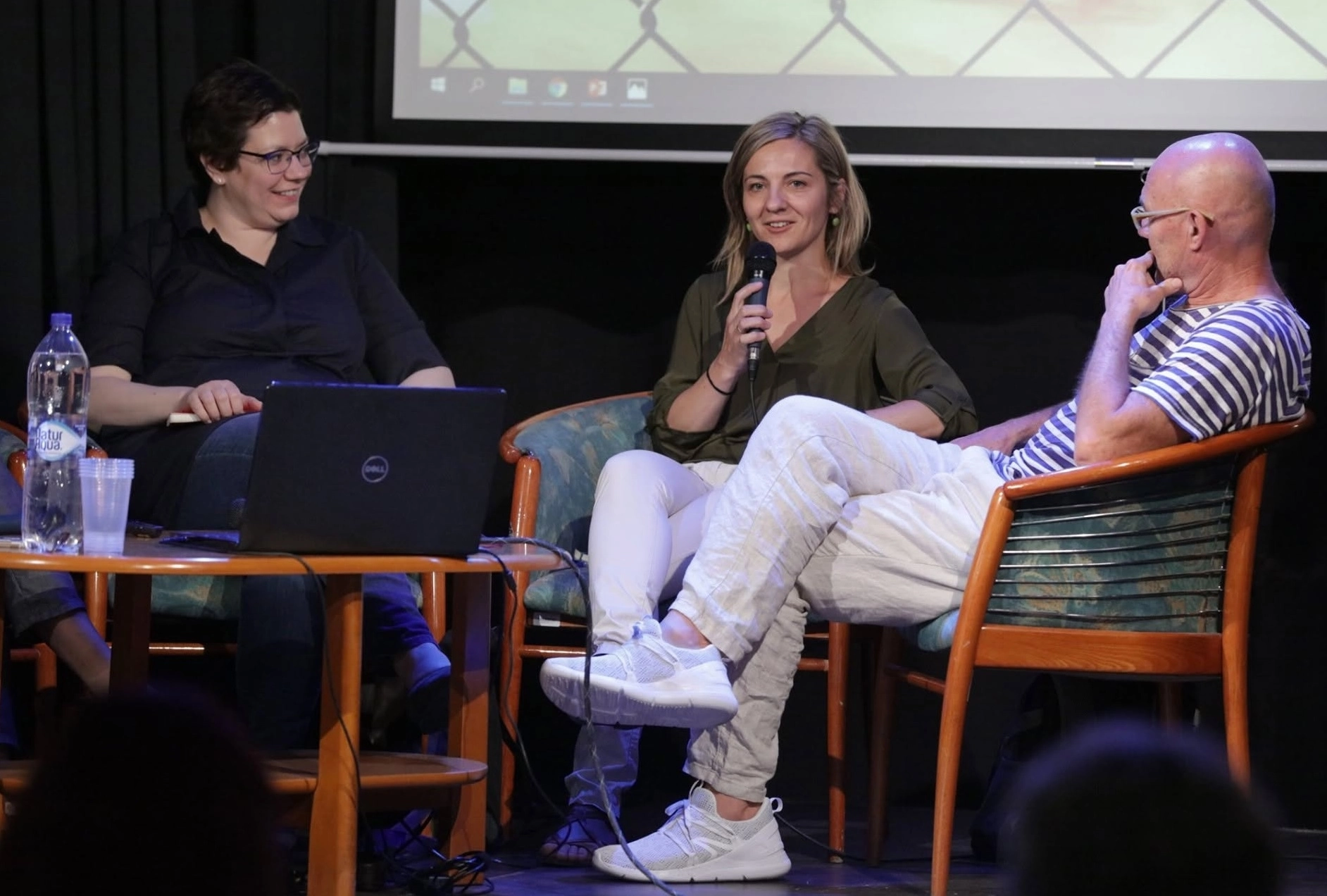
Besides her organisational work, she was a founding member and key figure in the grassroots movement for human rights in childbirth in Hungary and beyond. She also served as a Board member for ASTRA Network 2024-2026, the regional coalition of non-governmental organizations and activists for sexual and reproductive health and rights in Central and Eastern Europe, the Caucasus and Central Asia.
Activism Under Increasing Political and Financial Pressure
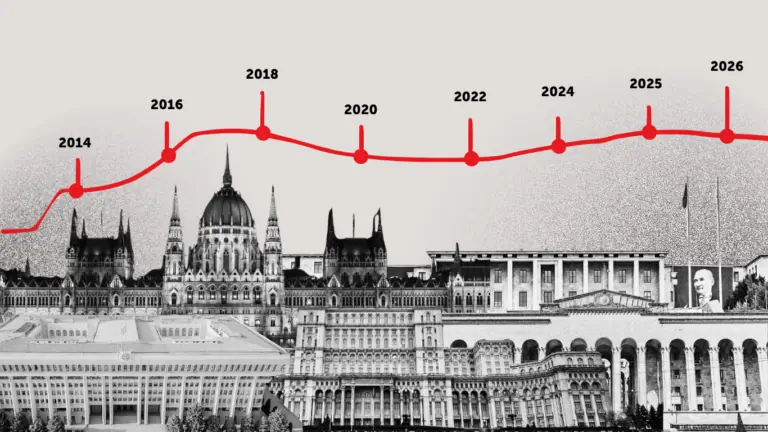
Erika worked in Hungarian civil society from 2010 to 2026, during the Orbán era, when the political machine, with endless resources, systematically attacked and divided civil society. She remembers that large, visible organizations absorbed major political blows, and though smaller ones were less politically exposed, they were more vulnerable on a human level.
“Direct political attacks, combined with the systematic starving and isolating of civil society, enter ordinary life. It affects your most private relationships, your financial security, your health. Meanwhile, the people doing this work often carry other people’s social tragedies every day,” says Erika.
Over the years, she experienced and witnessed the toll this environment is taking on activists and human rights defenders: emotional exhaustion, traumatization, depression, health deterioration. She also saw how organizing remained, adapted, transformed, and kept holding up the ceiling amid these pressures. Increasingly, she focused on how the civil sector’s structure itself makes activism harder to sustain. To better support activism and civil society organizations, she has enrolled in university again, this time studying psychology.
“There will always be extraordinary individuals who step up and give everything they have. But I want to see a non-profit sector that is no longer structurally built on people constantly giving more than they can afford to make change possible, or on their self-sacrifice as the price of doing this work.”
As Erika’s responsibilities grew, so did her awareness of power structures. Across the civil society and activist spaces she has worked in, people are deeply committed and highly motivated, yet often carry personal and collective trauma and navigate heightened sensitivity to power relations. She learned that bringing people into a space where rules and power relations remain untouched isn’t enough, and that systems need to change. Having become a leader herself also meant confronting her own position of power.
“I was no longer only a person trying to enter institutions or challenge them from the margins. For other people, I had become somebody with legitimacy, contacts, access, and decision-making authority. While responsibility felt morally legitimate, this power felt dangerous. I needed some time to realize that power has the capacity to make things possible, and focus on that.”
In her experience, leaders are expected to build internal ways of working that reflect the changes they want to see in society, often with very limited resources in environments that can be the exact opposite. “You are responsible for the people you work with, the work you do together, and the people you work for. And often you are also expected to respond to challenges created by the wider professional, political and social context,” she explains.
For Erika, leadership therefore means creating space for collective action. It means making room for different knowledge and experience, making connections, paying attention to nuance, and seeking genuine consensus when possible. It also means deciding when no solution works for everyone, and taking responsibility for the outcome.
“I don’t think I will ever do that part in a straightforward way,” she admits. “But I also no longer think that discomfort gives me permission not to do it.”
Erika also emphasizes the importance of knowing what deserves more time and attention, what can be left imperfect, and being honest about the values and considerations behind a decision.
“Leadership is a practice of continuous learning and reflection. It requires your whole personality, and you cannot sustain it without support. Your integrity plays a key role, and you need to work in synergy with your team, with a shared understanding that responsibility for the organization is something held collectively.”
Resourcing Social Change: A New Beginning on the Funder Side
By 2026, several timelines in her life reached a boundary almost at once: after a two-year planned leadership transition, she had finished her work at EMMA Association; Hungary’s political Orban era had changed; her youngest child had reached secondary school; and her beloved grandmother had died. “You don’t often get such a clear line in life,” she reflects, “I wanted to use it deliberately for recovering physically and emotionally, and also reflecting on what I have been through and what I am up for.”
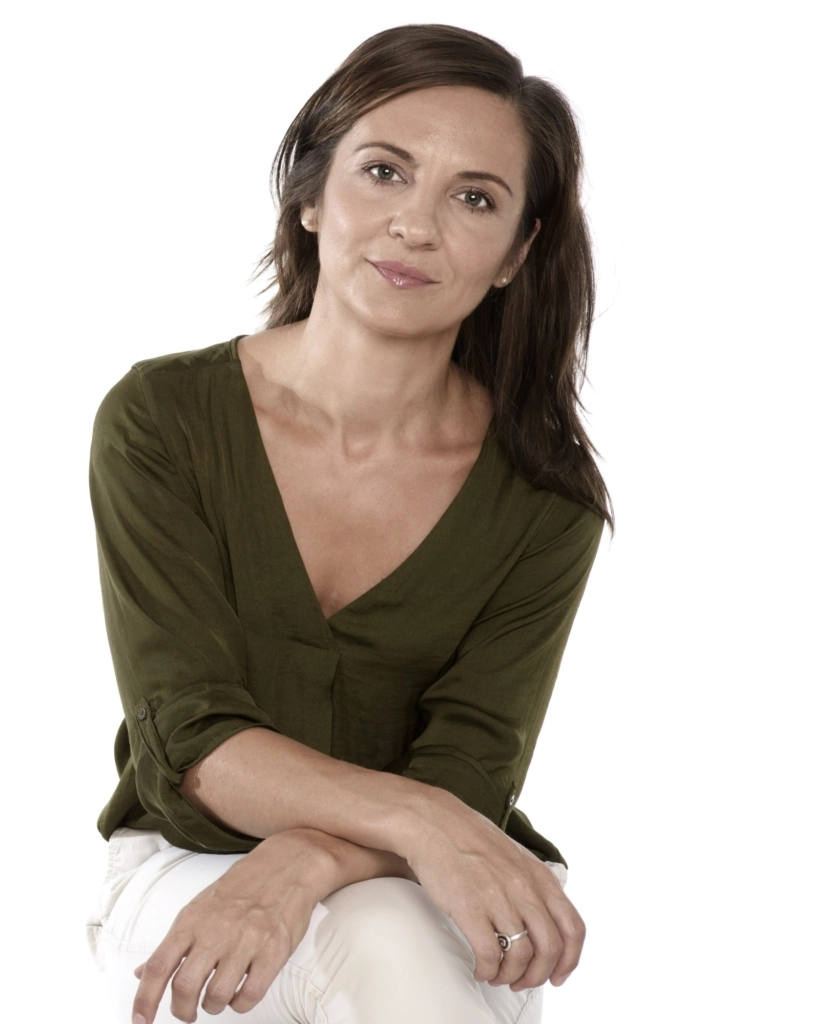
Joining Dalan Fund as Deputy Director was Erika’s decision to enter another world of social change, this time from the funder side. “After many years of activism and organizational leadership, you don’t take on leadership responsibilities lightly, and you don’t carry them lightly once you do,” she admits.
Dalan Fund’s broader thematic scope, explicitly intersectional approach, and its commitment to grassroots organizations speak to something she has come to see as fundamental to social change.
“We often talk about ‘civil society’ as big, high-profile organizations, but it’s more like a living tissue, where different actors contribute something specific, and their relationships and collaboration are essential. Social change ultimately happens through people and in the relationships between them. And that is exactly why organizations on the field, informal collectives, and local initiatives matter so much, because they create connections and reach people where they are,” argues Erika.
She has joined the fund, willing to experiment with new ways of doing things, and sees its primary role as supporting and strengthening the infrastructure of activism. Dalan Fund also works across countries, including her own, which share a historical inheritance shaped by experiences of authoritarianism and Soviet influence. Erika is joining at a moment of significant organizational transition that requires substantial internal work and a rethinking of operations.
“I am drawn to entering the funder world from a region that is still relatively invisible in many international philanthropic spaces, even though there is so much knowledge and experience here. I step into this new role with commitment and deep respect for what Dalan Fund has already become, and for the people who have brought it to life. I want to bring what I have learned from grassroots activism and organizational work to the transformative mission of Dalan, and help support activism in our regions to endure and grow.”