Author: Masa Elezovic, Resource Mobilization and Partnerships Manager at the Dalan Fund
I am writing this from Belgrade, Serbia. As I write, police are confronting protesters on the streets again, the same streets that have held civil unrest for over a year and a half now. I’m from Montenegro, where it took us thirty-one years to break the authoritarian chokehold. Even though I do not live in any of the 16 countries across Central and Eastern Europe, the Caucasus, and Central and North Asia (CEECCNA) where the Dalan Fund works, I have the mileage of protesting against regimes. I am not writing from a safe distance, just from another chapter of the authoritarian playbook.
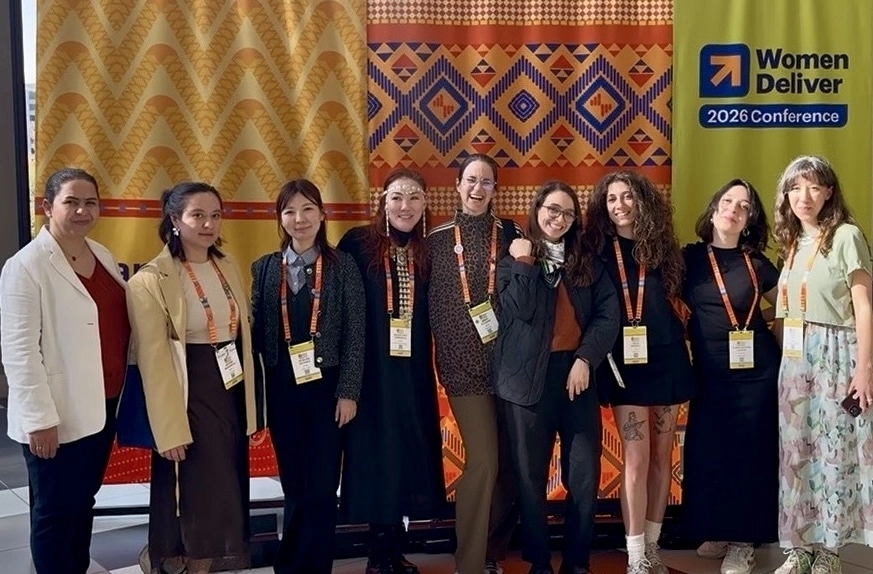
The same authoritarian playbook that our team members from Kyrgyzstan and Georgia, together with our partner from Turkey and grantees and advisors from Hungary and Romania, unpacked at Women Deliver in Narrm (Melbourne) in April 2026, breaking down, one by one, the tactics and tools used in the CEECCNA regions.
We were there to share years of frontline experience resisting authoritarianism from the perspective of those against whom the repressive laws in our regions have been written. Our session was designed to let the people living through it tell the story in their own words, with the dark shade of humor one acquires from being there as it happened.
Across CEECCNA regions, authoritarian governments are running the same playbook (with different timelines and pace in each context), which has three major chapters: foreign agent law to delegitimize civil society, legislation to silence independent media, and an anti-LGBTQI propaganda law. The playbook serves to manufacture an internal enemy with an external political agenda. The unfolding of the laws moves through three stages: attempt, where resistance is still possible; a breakthrough, when legislation passes; and consolidation, when the new reality becomes institutionalized and systemic, therefore, more difficult to reverse. The panel provided the audience with insights into the lived experience of living under and resisting the regimes and offered a word of caution about what is now spreading as a global phenomenon.
Hungary: Sixteen Years and a New Hope
How quickly a country slides from attempt to consolidation depends on several factors: how long the ruler has been in power, how solid democratic institutions were before the attacks began, how strong civil society was, how large a mandate a political force receives, and then weaponizes to hollow out democratic tools from within, and how much protection international structures actually provide when it counts. As for the last point, Hungary is the answer no one wants to hear. Hungary’s former prime minister, Viktor Orbán, built his entire system inside the EU, with full membership and full access to European courts.
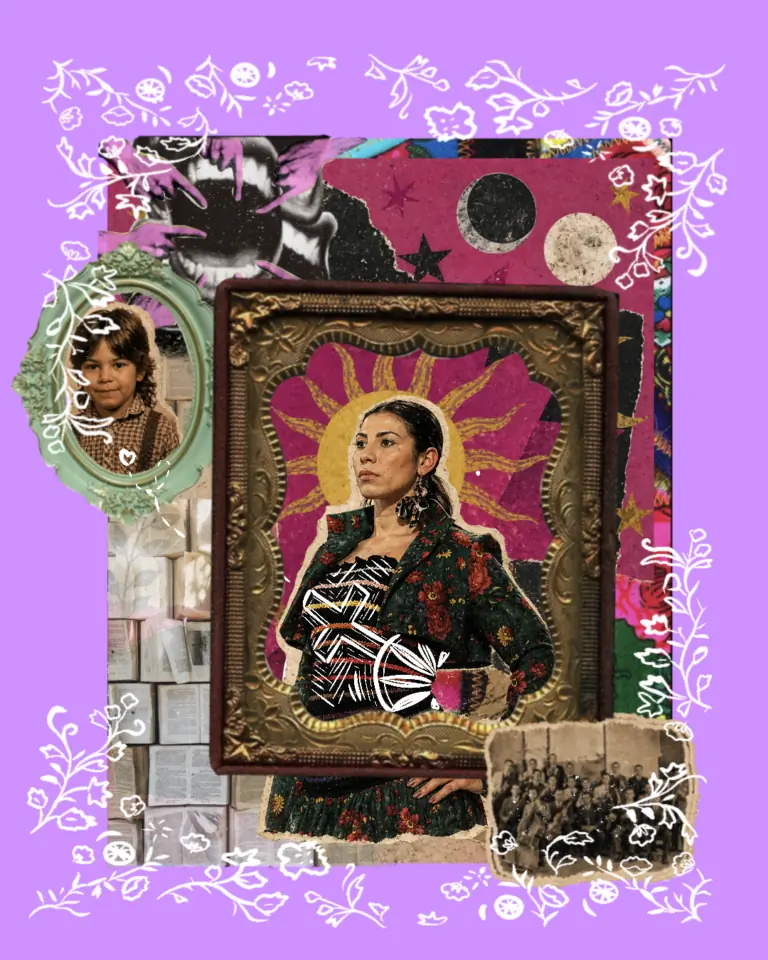
Clara Farkas, vice president of the Contemporary Roma Art Space Association and co-founder of the Bura Gallery in Budapest, walked us through what sixteen years of Fidesz rule actually looked like on the ground. Hungary under late communism was known as “the happiest barracks in the bloc,” a system that allowed people just enough freedom to feel it while controlling the narrative. Orbán knew how to use this legacy of an equilibrium between centralized control and limited autonomy.
Over sixteen years, Orbán had enough time to dismantle institutions from the inside: its courts, its universities, its media, its sense of what is normal. He used each term in office to make the next one easier to win, eroding the electoral system and the country’s institutions as he went.
First, they came for civil society organizations, with the foreign agent law in 2017 requiring those receiving international funding to register as “organizations receiving foreign funding” and carry that label in the name of transparency. In practice, it was designed to make civil society organizations appear to serve foreign interests rather than their own communities. The tactic worked, and the effect spread beyond the organizations themselves: individuals hesitated to associate with them, media campaigns became legally precarious, and cooperation across sectors became a matter of risk calculation. The Court of Justice of the EU struck it down as unlawful in 2020, and Hungary was forced to repeal it. But the repeal was not the end. In 2023, the government came back with a broader “defense of national sovereignty” package, criminalizing foreign funding of campaigns and creating a Sovereignty Protection Office with sweeping investigative powers. The first attempt failed in court. The second one learned from it.
Then they came for academic institutions. Central European University, a hub for critical social sciences including gender studies, was targeted by legislation so explicitly designed to shut it down that the European Court of Justice confirmed it. The government’s actions were met with some of the largest protests in recent years, as thousands of people in Hungary mobilized in defense of academic freedom and the university’s right to remain. The university waited, fought through EU channels, and eventually moved its operations to Vienna. The Court ruled in its favor, but by then the university and its intellectuals had already left Hungary.
The anti-LGBTQI propaganda law arrived in 2021. It prohibited the “promotion of homosexuality and gender identity to minors” and removed these topics from school curricula. A constitutional amendment followed, explicitly defining marriage as between a man and a woman and adding that the mother is a woman and the father is a man. All in the name of protecting children and the family, meaning the heteronormative, patriarchal one.
What followed were corruption scandals and child abuse cases involving government-pardoned officials, and the public’s reaction was both organized and symbolic. In 2025, the Pride march, technically illegal under the child protection law, drew nearly 200,000 people to the streets of Budapest. It was not just a Pride march. It was an act of collective defiance and a slap in the face, if you will, given how Orban´s regime spent years using the LGBTQI community as a scapegoat and dragging the rest of the country along with it.
Only weeks before this conference, Hungary’s elections delivered what many feared might never come: the fall of Orbán’s regime. It is too early to call it a resolution. Our colleagues from Hungary, Lilla Eredics and Erika Schmidt, wrote in more detail about what it means for civil society and philanthropy here.
Romania: In the Name of the Children
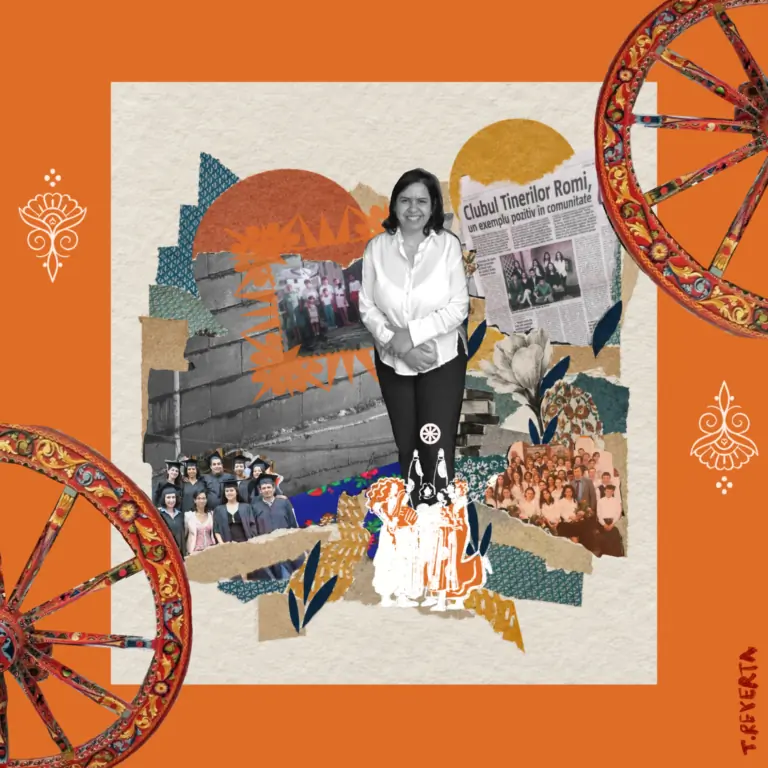
Simona Torotcoi is a Roma activist and scholar, a member of the Dalan Fund’s Romani Resource Distribution Committee (Romani RDC). She opened with a point she wanted the room to hold onto: Romanian civil society is not homogeneous. Some civil society organizations are closely affiliated with the Orthodox Church and the government; those allegiances quietly determine whose interests they serve — and whose they don’t.
In Romania, the Orthodox Church has carried the public debate around marriage and family for decades. The Church survived communism by coexisting with the regime, and when communism fell, it emerged with its institutional power intact. In the mid-nineties, it successfully pressured parliament to keep homosexuality criminalized, framing it as “capitalist decadence.” That was the opening move in a campaign that has not stopped since: pushing through legislation, mobilizing civil society, and working toward a constitution that would settle, in law, what a family is and who belongs in one.
Homosexuality was decriminalized in 2001, and in response, the Church mobilized ethno-nationalist organizations and right-wing parties, then shifted its energy toward the constitution. From 2004 onward, far-right parties were building the same anti-gender narrative from different angles. In 2015, the Coalition for Family, a Church-affiliated organization, launched a citizens’ initiative, voted on by the people from the most religious parts of the country, to amend the constitutional definition of marriage from “between spouses” to explicitly “between a man and a woman. ” It collected three million signatures. The referendum was held in October 2018. Rights organizations called for a boycott, and it worked: only 20% of eligible voters turned out, well below the 30% threshold required for validation. Still, the three million signatures collected to trigger the referendum showed the scale of organizing behind the campaign, and how much capacity the anti-rights coalition had built.
What followed built up slowly, layer over layer. The March for Life, backed by the Church, brought priests and schoolchildren onto the streets, with many children not knowing what they were marching for. By 2024, all of it had culminated in a moment of real danger: Călin Georgescu, a candidate with openly authoritarian sympathies, came close enough to victory that the movement had to seriously reckon with what a Romanian version of Hungary would look like.
Georgescu lost, but not because Romanians voted for their current president with any enthusiasm. Georgescu managed to gain people’s trust by quoting the Bible and reaching the hearts of Orthodox and mainly neo-Protestant people, with this tactic marketed as“the one sent from God”. His wife was also an important instrument in his campaign, targeting women and giving advice on topics such as health, faith, and others.
They voted against Georgescu specifically. Romania has not yet adopted a foreign agent law, but in May 2026, the Senate passed a draft law forcing organizations to disclose their donors, which was criticized by Romania’s own advisory bodies and the Council of Europe’s NGO law experts as a foreign agent law in disguise. As this goes to publication, it awaits a final vote in the lower chamber. Romania remains in the attempt stage, where pushing back is still possible. The country is still in the attempt stage. As Simona noted, that moment showed Romanian society exactly where it was headed if the social justice movement stopped pushing.
Turkey: The Cage Doesn't Need a Lock
Ezgi Kan is one of the co-founders of Feminist Fund Türkiye, and she was precise about the shape of what happened: the shrinking of civic space in Turkey did not happen overnight. It was a calculated, cumulative dismantling of rights, built layer by layer, with anti-gender narrative as its political weapon. But if you had to name the turning point, in her words, it was 2016. Following a failed coup attempt, the government declared a state of emergency, and the decrees that followed permanently closed civil society organizations, with LGBTQI+ organizations and women’s organizations in Kurdish regions among the hardest hit. Indefinite bans were issued on LGBTQI+ events, gatherings, film screenings, and exhibitions, and the bans were never lifted.
Then came 2021, and a midnight presidential decree withdrawing Turkey from the Istanbul Convention, the international framework designed to protect women from violence. The state was abandoning the principle of gender equality, and it wanted that on record. Then, in 2025, the state declared the Year of the Family, and the Ministry of Family and Social Services issued a circular explicitly targeting the concept of gender equality, framing women outside traditional roles and LGBTQI+ people as threats to national values. Anti-gender rhetoric had moved from campaign speeches into administrative orders.
A foreign agent law was proposed in 2024 and then withdrawn. As Ezgi put it: “The mere threat of the law itself is a cage that is just as strong as the law itself.” The government enforces the same intent through existing laws on espionage, disinformation, and antiterrorism. Organizations face constant administrative audits designed to paralyze their day-to-day work, and individual leaders of LGBTQI+ organizations are being targeted. The Istanbul Pride March has been officially banned since 2015, and attempting to march now means facing police violence and immediate arrest. Turkey never needed the law because it consolidated around the threat of one.
Public funds are channeled to government-aligned organizations while independent civil society is systematically excluded, including from collecting public donations. Turkey ranks in the top 20 globally in economic size and in the bottom 20 in gender equality. The resources exist, but feminist and LGBTQI+ organizations simply have no access to them. What they have instead is pressure to align with international funding ecosystems, which, as Ezgi noted, often becomes its own trap: short-term, project-based grants that keep organizations alive but precarious, always one funding cycle away from collapse.
Kyrgyzstan: The Work of Activists Was Never Foreign
Nurjan Estebes, Dalan Fund’s Resource Distribution Manager, shared that Kyrgyzstan was once called the island of democracy in Central Asia. As she put it, that feels like decades ago, but it was only a few years ago that things were genuinely better. The decline, when it came, was rapid. What took ten years was the law itself: the first attempt at a foreign agent law came in 2014, and a decade later, it passed. The collapse of everything around it took far less.
The decline came in overlapping layers, in parallel, rather than one after another. The anti-LGBTQI propaganda law imposed penalties for spreading any information about LGBTQI people and their rights, and even TikTok was banned. The foreign agent law, passed in 2024, hit LGBTQI+ organizations first: they were forced to either liquidate or go into exile. Independent media platforms were shut down, and journalists were detained and interrogated for inviting people to protest online. The criminal charge, in case after case, was the same: attempted overthrow of the government.
What made it harder to see coming was the narrative running beneath it all. State-affiliated media and religious groups reframed a decade of legitimate civil society work as Western contamination, as foreign interference, as a threat to traditional values. As Nurjan described it, an entire group of people was marked as the cause of all society’s problems, and the work they had done for years was suddenly called into question.
Some activists are still there, but many are not, and the list of people who cannot go home because of their activism keeps growing. Activism in exile, she said, is becoming not just a reality but a strategy. And for those who stayed, the foreign agent label has become something to refuse on principle: “activists have been totally rejecting and totally denying this vocabulary, showing that they are not foreign, that they are actually rooted in local knowledge and local experiences.”
Georgia: The Fastest of Them All
Georgia did not get its own segment in the room, but it ran underneath the entire conversation. Nino Ugrekhelidze, Dalan Fund’s Lead and a Georgian herself, kept drawing parallels to her home country, where it played faster than anywhere. For years, Georgia was where activists fled when civic space closed in on them in Belarus, Azerbaijan, or even Russia. Then the playbook arrived there, too.
The first attempt came in early 2023, when parliament advanced a foreign agent bill targeting media and NGOs. Mass protest forced the government to withdraw it, but the victory was brief. In 2024, the government brought it back and passed it, this time through a smokescreen of tear gas and rubber bullets, beatings, and detentions. Alongside the law came an anti-LGBT propaganda bill, the cancellation of gender quotas in parliament, and the announcement of restrictions on abortion. By 2025, a harsher foreign agent law was enacted, imposing criminal liability and requiring that any foreign-funded grant be approved by the government. Georgia was the playbook on steroids: fast, efficient, and mercilessly devastating.
The Movement Doesn't Stop, It Adapts
The picture so far is bleak, but across all five countries, organizing never stopped. It adapted, went underground, crossed borders, and found new forms.
In Central Asia, activists from Kazakhstan, Kyrgyzstan, Uzbekistan, and Tajikistan have been building cross-border alliances and platforms to share strategies for navigating repressive laws. Activists who have already lived through a law are sharing with those who are about to find out what is coming, and that knowledge transfer is its own form of resistance. Independent media in local languages have been another lifeline. Not only in Russian but also in the languages people actually speak in their homes and communities, ensuring alternative narratives reach every part of these countries, not just urban centers with Russian-language access. For those who could no longer stay, activism continued from exile.
In Turkey, the movement’s strength was most evident during a crisis. When the 2023 earthquake hit and the state’s response failed, it was feminist and LGBTQI+ networks that stepped in immediately, providing shelter, legal support, and psychological support to women and LGBTQI+ people. The infrastructure that the state had spent years trying to dismantle was what saved lives. The “no-to-hate law” campaign pushed back the anti-LGBTQI propaganda bill twice. At public celebrations, movement members formed physical security circles around queer attendees to protect them from violence, making the safety net literal.
In Hungary, the Bura Gallery built an alternative cultural and political space for Roma artists and activists throughout the Orbán years. Art and culture, as long-term narrative infrastructure, were sustained over sixteen years of shrinking space.
In Georgia, civil society took the regressive laws to the European Court of Human Rights and kept the streets occupied for more than a year of continuous protest. Movement partners continued to support their communities through solidarity practices across the region.
One thing ties it all together: building internal rapid-response and support capabilities for critical movement infrastructure. Not waiting for international organizations to arrive, but investing in local capacity that understands the context and can move at the speed the moment requires. As Nino put it, the pace of political contexts shifting and the pace of philanthropy are deeply misaligned. Movements shape-shift faster than funders follow. Going underground does not mean going away; it means the movement is still there, just in a form that institutional funding often cannot see.
So, What Can Funders Do?
Everything the activists described in that room ends at the same question, so let me put it plainly: movements may go underground, but they don’t get buried. When governments adopt foreign agent laws and organizations are forced to liquidate or relocate, the work does not stop. It becomes untrackable through funders’ usual MEL frameworks. The organizations most embedded in their communities, most adaptive, and most capable of rapid response are often the least visible in standard due diligence. They may be unregistered, operating across borders, and from the outside, it may look like they have gone quiet. So here is what funders can actually do.
Fund crisis prevention and preparedness. Local activists are the first to signal that a crisis is on the horizon: the foreign agent law in Russia came in 2012, and the cascade has been visible for over a decade. Prevention means moving resources to movements and infrastructure before the window closes, not after organizations have been shut down and activists have gone into exile.
Fund what is already there. Cross-border alliances, service providers, independent media in local languages, rapid-response networks, activism in exile: none of this is new. It exists, and it is working. It needs consistent, flexible, multi-year support, not project grants that expire before the political moment does.
Fund organizations you cannot easily see. Unregistered collectives, informal networks, and underground organizing are rational responses to conditions that make formal registration unsafe. If a funding mechanism cannot reach them, the mechanism needs to shapeshift as much as movements do. Participatory, movement-informed funding models exist precisely for this purpose, and the responsibility to adopt them lies with funders.
Fund the critical infrastructure. The infrastructure that keeps movements alive- community trust, care, legal support, knowledge production, and digital security- makes everything else possible.
Share the risk. Repressive laws make it difficult and sometimes dangerous to move resources in traditional ways. Funders who are serious about this region need to be willing to navigate that complexity alongside movements, not retreat from it.
First They Came For…
You know how the poem goes. It is about how easy it is to stay quiet and hope that it won’t come for you. But the playbook doesn’t play favorites. The authoritarian playbook tested in CEECCNA will not stay there. Authoritarians learn from each other, and they are accelerating faster than the response to them. This is not a regional crisis with a regional solution. It is a stress test for every democratic system that has not yet been through it. The question is, what will you do with that knowledge?
The activists who spoke in Narrm have already lived through what is now on the streets outside my window. They are not asking to be praised for their resilience. They are telling you what to expect so that you can prepare.