Authors: Erika Schmidt and Lilla Eredics
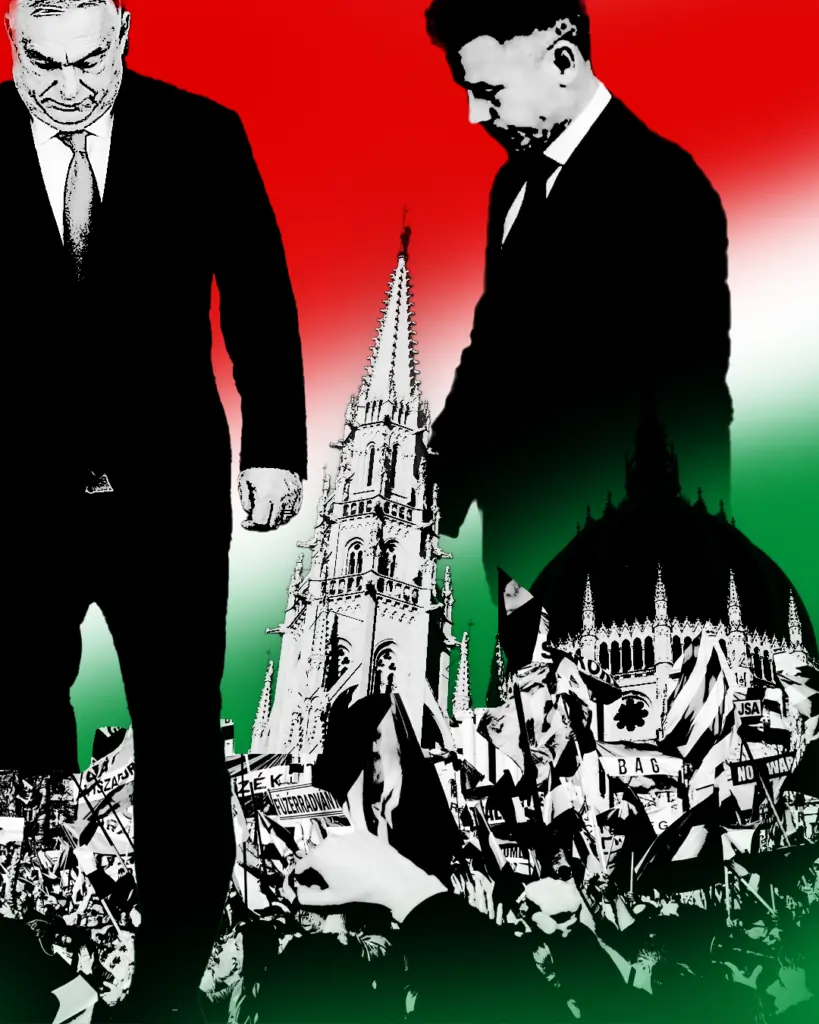
On April 12, 2026, on the night of the elections, Hungary stood in the global spotlight. For the first time in 16 years, there seemed to be a real chance for what Hungarians collectively referred to as a “regime change.” The sentiment was sweeping across the capital when the results confirmed the fall of Orbán’s regime with a two-thirds majority. People chanting and crying on the streets, dancing on the bridge, hugging strangers, marking a historical moment in Hungarian politics.
For many working in civil society, this moment held a very specific, long-awaited meaning. A long-oppressed sector, social justice organizations working under constant attack with ever-scarcer resources and a shrinking space to operate, saw its biggest adversary, Orbán’s authoritarian and suffocating regime, fall.
Yet despite the collective relief, this is not a moment of resolution, but a beginning of a long and complex transition.
Hungary’s civil society sector is holding its breath with cautious optimism as it steps out of “survival mode” after the 16-year rule of the Orbán regime. While there is no guarantee of meaningful transformation, civil society is clearly determined and ready to re-enter national advocacy spaces and actively shape the country’s democratic future.
Newly elected prime minister Péter Magyar previously distanced himself from established civil society organisations, associating them with former opposition actors. However, with a constitutional majority, he now has a real chance to start rebuilding democratic institutions and dismantle Orbán’s authoritarian state.
Orban´s take on (and copycatting of) the authoritarian playbook
Hungary’s last 16 years are often described as an exceptional case of democratic backsliding within the European Union. But from a regional perspective, what unfolded followed an authoritarian playbook that movements across Central and Eastern Europe, the Caucasus, and Central and North Asia have repeatedly encountered.
Since returning to power in 2010, having served nearly a decade earlier, Orbán’s government has systematically consolidated power, dismantled Hungary’s democratic institutions, and steadily narrowed civic space. Backed by a constitutional supermajority, his party, Fidesz, has amended the Constitution fifteen times and overhauled the country’s legal order. Media outlets have been brought under state influence, education has been politicised, and the judiciary co-opted.
Civil society became one of the most sustained targets of this transformation. Over the past 16 years, it was pushed into survival mode through a layered mix of legal, political, and financial pressure. International monitoring by CIVICUS has repeatedly classified Hungary’s civic space as obstructed. European analyses highlight a decline in the rule of law and the exclusion of civil society groups from advocacy spaces.
Cascade of Regressive Laws: Orbán’s government repeatedly invoked transparency and national sovereignty to justify measures restricting independent organizing. The 2017 NGO law forced organizations receiving foreign funding to register as “foreign-funded,” labeling them as suspect actors and reinforcing a narrative that civil society is a threat. Although later repealed under EU pressure, it was replaced by new mechanisms such as Lex NGO 2021, allowing increased state scrutiny. The same approach emerged in the “Stop Soros” package. Adopted in 2018, it criminalized certain forms of assistance to asylum seekers and blurred the line between legitimate civic activity and prosecutable conduct. The legislation remained in force until it was amended following a 2021 Court of Justice of the EU ruling.
Financial and Administrative Scrutiny: The government worked to discredit and delegitimize independent funding sources. Civil society found itself in a structural trap: dependent on external resources to survive, yet attacked for that dependence. Grantmaking and intermediary organisations managing international funds faced political attacks, investigations, and smear campaigns, creating an atmosphere of intimidation around the funding of independent civil society.
Strengthening the anti-rights actors: The Hungarian government systemically supported the anti-gender movement, acting as a major state sponsor: it channelled large-scale public funding into state-controlled or aligned foundations, institutions, and government-organised NGOs (GONGOs), and built a coordinated infrastructure of think tanks, media platforms, and advocacy actors to advance and export its ideological agenda across Europe.
From Survival to Long-term Strategies: Civil Society´s Response to Orban´s Regime
Over 16 years, this layered environment of legal, political, and financial pressure reshaped the conditions under which organising could happen. Much of civil society’s capacity was consumed by the mere act of surviving, navigating legal risks, responding to attacks, and securing funding in an increasingly hostile environment. This often came at the expense of building broader support and developing longer-term strategies.
Ongoing pressures weakened collaboration across organizations, as competition for limited resources and heightened risk reduced opportunities for collective work. Connections to international movements became more difficult to sustain, not only due to political narratives but also because of limited capacity and resources. Visibility decreased as organizations navigated the risks associated with public presence.
Prolonged exposure to uncertainty, pressure, and stigmatization contributed to individual withdrawal and, in some cases, had serious mental and physical health impacts. Some initiatives reduced their activities or went dormant, which further eroded the collective capacity.
Despite these constraints, civil society did not disappear. Organisations and informal initiatives continued to operate, adapt, and contest the narrowing space available to them. Moreover, civil society has done a lion’s share in defeating Orbán’s regime.
Hungary’s civic resistance over the past 16 years did not take the form of a single unified movement, but rather a series of interconnected waves of organising across different sectors of society. These included sustained work by watchdog and rights-based organisations and local community initiatives, as well as periodic mass mobilisations around specific issues.
Many organisations stepped in where public systems were weakening or failing, providing essential support. This was especially visible during the arrival of refugees from Ukraine in 2022 and 2023, when civil actors played a key role in organising aid and support systems, coordinating resources, and responding to urgent needs, while centering human rights and dignity as a guiding principle of their response.
Protests around the education system brought together teachers and students, creating one of the most visible waves of civic action in recent years. Similarly, recurring demonstrations, from large-scale protests to the sustained presence of informal groups, from long-term advocacy campaigns by organisations to individual-level fights for rights and dignity, highlighted the crises of the social and healthcare systems. The resistance also exposed a broader struggle around sexual and reproductive health and rights, the right to a dignified end of life, and the caring crisis, connecting personal experiences with structural critique.
The organisation of Budapest Pride parade in 2025 made visible a different, but related front of this struggle and became a powerful symbol of resistance. Held under legal and political pressure, shaped by anti-LGBTQ legislation and surveillance, it became a public test of whether collective visibility was still possible. The fact that hundreds of thousands of people showed up in Pride, which was legally banned, points to the persistence of civic organising even under sustained constraint.
Other moments of mobilisation were triggered by acute political or moral crises. The public outcry following the child protection scandals and the presidential pardon case led to large-scale demonstrations, mobilising constituencies beyond traditional activist circles, including artists, public figures, and influencers.
All these matter for how we understand the present moment. While pushed into survival mode, civil society remained part of the political landscape, keeping certain issues visible, supporting affected groups, and maintaining forms of collective action that did not fully collapse under pressure. In adapting to these constraints, in many cases it became more skilled at navigating them.
Orbán’s defeat cannot be understood independently of this longer process.
Role of Philanthropy in the Current Moment
The Hungarian case shows that even under severe constraints, civil society sustained resistance, preserved democratic practices, and contributed to the conditions that made political change possible.
This is precisely where philanthropy must reckon with its role in acknowledging social organizing as key to dismantling authoritarian regimes and, hence, to supporting the rebuilding of the systems and infrastructures that were systematically eroded.
Hungary is now entering a period where political change opens new possibilities, but does not automatically restore lost capacity, nor does it instantly rebuild the systems and infrastructure that have been dismantled under Orban´s rule. However, early signs from the new government offer cautious optimism, and serve as an opportunity for strengthening civil society as a key steward of the upcoming changes.
In his speech following the inauguration ceremony, Hungary’s new prime minister Péter Magyar distanced himself from the previous government’s hostile framing of NGOs and independent civic actors. Speaking positively about communities, solidarity, participation, and democratic engagement, he highlighted the importance of creating an environment for people to “speak to each other again” and participate in a shared democratic future.
“I apologize to the civilians, teachers, journalists, healthcare workers, and public figures who were stigmatized, vilified, or treated as enemies simply because they dared to speak out, because they dared to stand up for the vulnerable, because they voiced criticism, or simply because they held a different opinion,” announced Magyar on May 9.
For philanthropy, this is a critical moment to think ahead and engage strategically and proactively by investing in social justice movement infrastructure, people, strengthening resilience, building cross-border connections, and supporting movements in anticipating and responding to emerging challenges.
Without sustained investment, civil society risks remaining structurally fragile, reactive rather than shaping the political direction of the post-authoritarian period.
What happens next in Hungary can also inform how similar transitions are approached.